How long can you leave a cat alone?
The quick answer is right below. After that: kittens, senior cats, holidays, what to prepare and the case hardly anyone plans for.
Last reviewed:
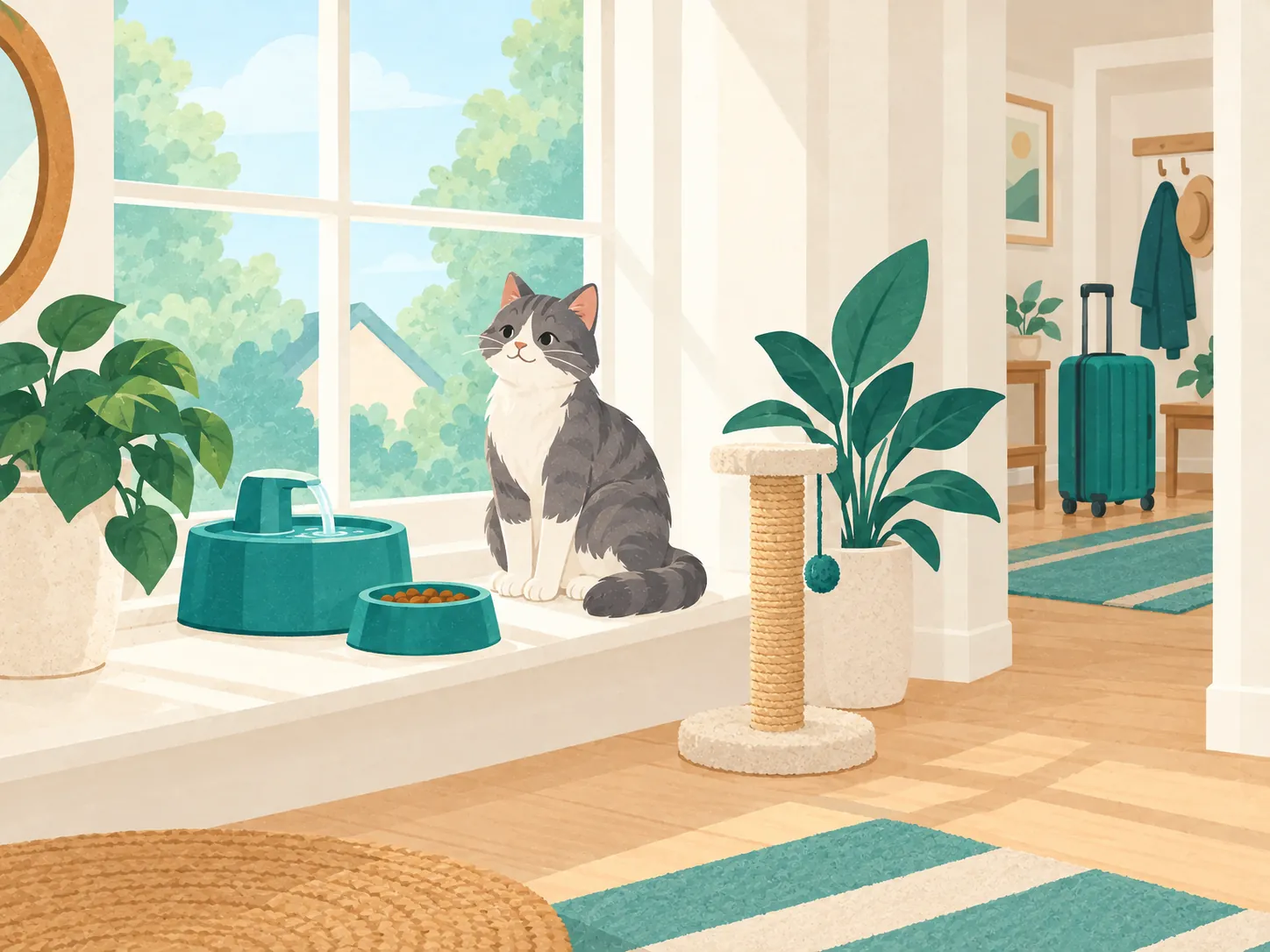
Quick answer
A healthy adult cat can cope with a working day alone. Cats Protection puts the ceiling at around 12 hours, and only occasionally. Kittens need someone far more often. Holidays are different: the German animal welfare foundation VIER PFOTEN advises against leaving a cat alone and unsupervised, even with enough food, water and litter trays.
| Cat | Guideline |
|---|---|
| Kitten | only a few hours at a stretch (Cats Protection) |
| Adult cat | up to about 12 hours, not regularly (Cats Protection) |
| Elderly or sick cat | check more often, no fixed number (Cats Protection) |
| Holiday, several days | a sitter twice a day (VIER PFOTEN, Cats Protection) |
None of these sources gives a fixed number of days. Cats Protection talks about a single day and recommends a sitter or a cattery for consecutive days. VIER PFOTEN goes further and advises against any holiday arrangement without care.
Kittens, adult cats and senior cats
Kittens
Young cats need frequent feeding and more supervision. According to Cats Protection, kittens should be left for a maximum of a few hours at a time.
Adult cats
Around 12 hours is the ceiling (Cats Protection). It applies to single days, for example when you are out longer than usual once. As a regular pattern it is too long.
Elderly or sick cats
Elderly cats and cats with medical conditions need checking more often than healthy adults (Cats Protection). The source gives no number of hours. Ask your vet what suits your cat, especially if it takes medication.
Holidays
VIER PFOTEN recommends asking someone to look after your cat in its familiar home. The sitter should come twice a day, feed, clean the litter tray and play with the cat. If you do not want to hand a stranger your keys, a cattery is the alternative. Visit it in person first, because quality varies.
What to prepare
This list follows Cats Protection:
- Water and food: Plenty of fresh water. Wet food spoils quickly, so leave only what your cat will eat while you are out.
- Litter tray: Clean it before you go and fill it with about 3 cm of litter.
- Safe room: Remove cables, string, toxic plants, medication and cleaning products.
- Entertainment: Safe toys and puzzle feeders against boredom.
- Retreat: Hiding places and raised perches so your cat feels secure.
- Window and territory: Access to a window and to its usual area.
- Microchip: Your cat is chipped and the contact details are up to date.
- Temperature: The room should not heat up in summer or get cold in winter.
Signs of stress
Cats often show stress in subtle ways (International Cat Care). Cats Protection lists, among others: hiding more than usual, toileting outside the litter tray, overgrooming or a scruffy coat, lower activity and less appetite.
If you notice this after an absence, talk to your vet. The cause can also be medical.
And if you don't come back?
A full bowl bridges a normal day. If you have an accident, end up in hospital or faint and cannot reach anyone, nobody knows that a cat is waiting at home.
Three things solve this:
- Helpers with a key. At least one person who knows your cat and can get into your home. Two or three is better, so someone is always reachable.
- An emergency card in your wallet. If someone finds you, they know your cat is alone and whom to call. PawSafe creates the card as a PDF with up to four numbers in the order to call them. More: pet emergency card.
- PawSafe as the automatic safety net. You start the timer when your cat stays home alone. If you do not check back in, PawSafe alerts your helpers one after another. When one taps "I'll help", you find out right away and the others do not need to do anything. App notifications are free. SMS and WhatsApp come with an optional subscription.
How to arrange everything for a hospital stay is covered in What happens to my pet if I go to hospital?. If you have a dog: how long can a dog be left alone.
Sources
Frequently asked questions about leaving a cat home alone
How long can you leave a cat alone?
A healthy adult cat up to about 12 hours, and only occasionally (Cats Protection). Kittens only a few hours at a stretch. Elderly or sick cats need checking more often.
Can you leave a cat alone for a weekend or a holiday?
VIER PFOTEN advises against leaving a cat alone and unsupervised, even with enough food, water and litter trays. A sitter who visits twice a day is the better option.
How often should a cat sitter visit?
Twice a day, according to VIER PFOTEN. Feeding, cleaning the litter tray and playing belong to the routine.
How long can a kitten be left alone?
According to Cats Protection, a maximum of a few hours at a time. The source gives no exact number because kittens vary.
What should I leave out for my cat when I am away?
Fresh water, the right amount of food, a clean litter tray with about 3 cm of litter, safe toys, hiding places, raised perches and access to a window (Cats Protection).
How do I know if my cat is stressed?
Cats Protection lists hiding more, toileting outside the tray, overgrooming, lower activity and less appetite. If in doubt, ask your vet.
Who looks after my cat if something happens to me?
Only people who find out. Give at least one person a key, carry an emergency card and use PawSafe. If you do not check in when the timer runs out, PawSafe alerts your helpers one after another.