PawSafe / Guides
Pet sitter checklist: what a helper must know about your pet
A dog sitter and cat sitter checklist for the sheet that hangs in your home. It helps the planned sitter and the helper who arrives with no warning because you can no longer check in.
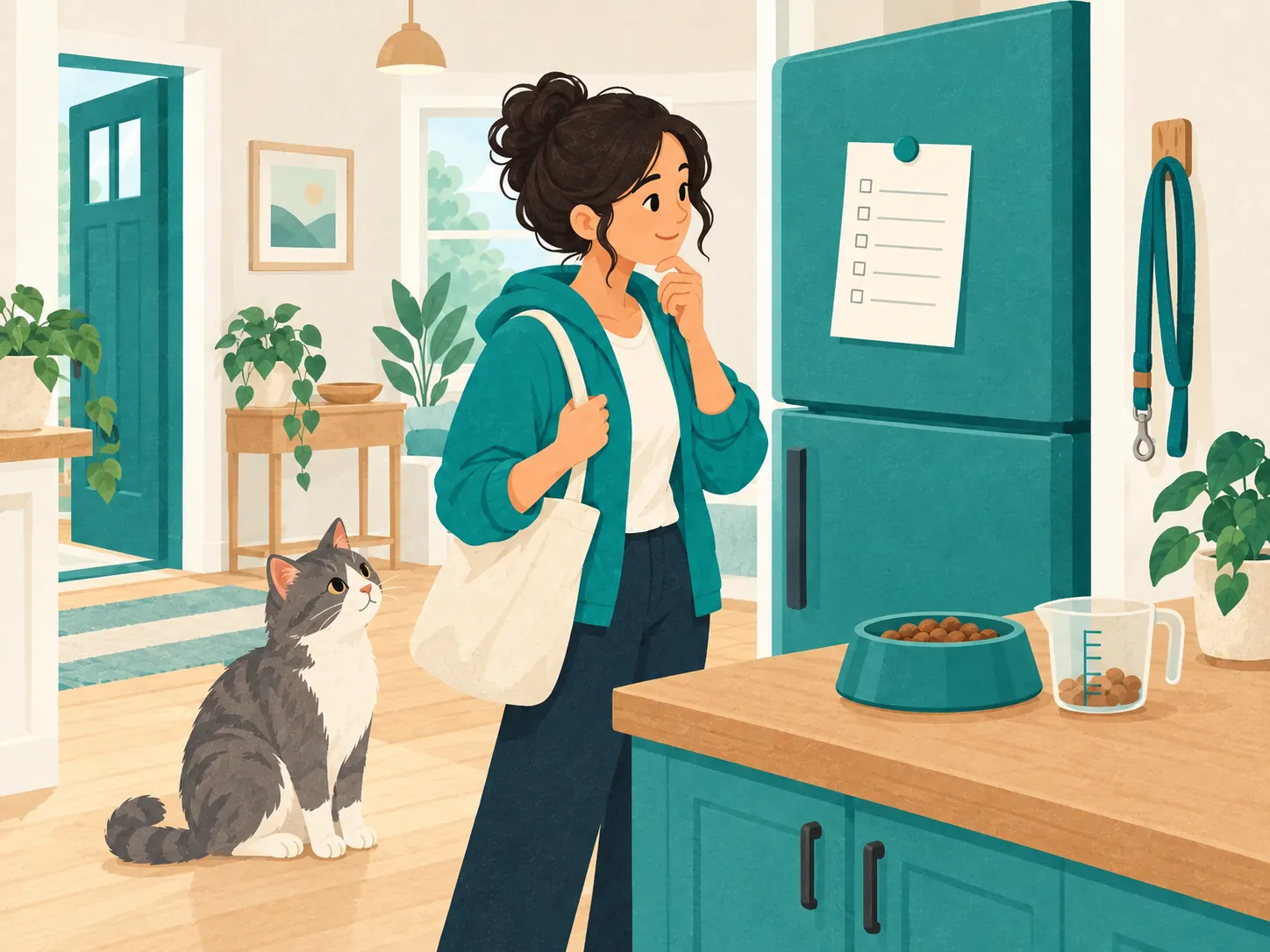
Who this sheet is for
Most pet sitter checklists are written for a holiday. You pack, you explain everything calmly, you leave. This sheet has a second purpose. It covers the day you cannot explain anything because you are in hospital or your phone is gone. A helper then stands in your home who may know your pet but not your routine.
The sheet works for both cases. It helps the dog sitter who arrives next week just as much as the neighbour who turns your key tonight with no warning. You write it once and put it where people see it.
Good instructions are specific. “Feed as usual” tells a stranger nothing. “Half a can at 7 am and at 6 pm” tells them everything.
Do not leave the sheet only in the flat. Take a photo and send it to your helpers. That way they have the details even while they are driving to your home, before they open the door. Update the photo whenever something changes.
Feeding: amount and time
Write down what your pet eats, how much and when. Name the place where the food is kept and how you measure it. A bowl, a scoop, a can: your helper should not have to guess. Note whether treats are allowed and which. And what your pet must never eat, for example because of an allergy.
For cats, add the litter tray. Where is it, how often is it cleaned, where is the litter kept? For dogs, note whether they need a rest after eating.
Medication: name, dose, time
This is where mistakes cost the most. Write the name of the medicine, the dose, the time and how it is given. A pill in the food, drops in the mouth, an injection? Say where the pack is. If your vet told you what to do about a missed dose, write that down too.
If your pet takes nothing, write “none”. A blank line leaves open whether you forgot.
Vet and emergency vet
Enter your vet with address and number. Add the emergency vet service or the nearest clinic that opens at night and at weekends. Look up that number before you need it. In a real emergency nobody has the calm to search.
Also note whether you have pet insurance and whether your helper may approve treatment. Be clear about how far they should go and whom they must call. Where the pet passport is kept goes further down. What it contains is explained in our German guide to the EU pet passport, the Heimtierausweis.
Walks or outdoor access
Dog sitters and helpers need the round: how long, how often, which route, on lead or off. Name places your dog avoids or loves too much, and dogs in the neighbourhood he dislikes. Say whether he wears a muzzle or harness and where both hang.
For cats the question is whether she may go outside. If yes: when does she come back, and is there a flap? If no: which windows and doors stay shut? An indoor cat that slips through an open door is an emergency of its own.
What your pet must not do
Every pet has quirks. The dog must not go on the sofa, the cat must not use the balcony, the rabbit must not share a room with the cat. Write down everything that is dangerous or unwanted. That includes toxic plants, food from the table and places that are off limits.
Also name the signs that mean the helper should call the vet at once. Agree these with your vet and write them in.
Where are the passport, lead and carrier?
When time is short, everything is missing. Write down where the pet passport is, plus the lead, the carrier, the poo bag holder and a towel. The carrier is the item people hunt for most in an emergency, because it takes the cat to the vet.
Add the microchip number and the register it is in.
House notes
A helper is also a guest in your home. Explain what usually causes trouble: which heating is on, which window sticks, where the bins go, how the alarm works, where the fuse box is. If someone else in the building should know, name them.
Important: never write door codes, alarm codes or passwords on a card in your wallet. Whoever finds your wallet would then get your address and access in one go. Give such details to your helpers in person, or put them where they only appear in an emergency.
The checklist to print
Fill in the lines by hand and tick the boxes. Printing shows only this sheet.
Care sheet for pet sitters and helpers
Feeding
Medication
Vet
Walks or outdoor access
How often, how long, route, leadWhat my pet must not do
Where things are
House
Heating, windows, bins, alarm (no codes on cards in your wallet)How PawSafe helps
The sheet tells your helper what to do. PawSafe makes sure they find out at all. You start the timer with one tap when your pet stays home alone. If you do not check back in, PawSafe opens an emergency and alerts your helpers one after another.
When a helper says “I’ll help”, you know right away and the others can stand down. In an emergency the helper sees your address and access note, but only after their own tap. Until then both stay hidden. Your address is not on a card in your wallet, and not on the phone of a helper who has no emergency to deal with.
Helpers with PawSafe get the alert as a free notification. PawSafe reaches helpers without the app by SMS and WhatsApp, with an optional subscription. Helpers never pay, and they need no account or login.
Frequently asked questions
What goes on a pet sitter checklist?
Feeding with amount and time, medication with dose and time, vet and emergency vet, walks or outdoor access, what the pet must not do, where the pet passport, lead and carrier are, and notes about the house.
How does a dog sitter checklist differ from a cat sitter checklist?
For a dog, walks, the lead and behaviour around other dogs matter. For a cat, the litter tray, outdoor access or closed windows and the carrier matter. Food, medication and vet belong on both sheets.
Should I write door codes on a card in my wallet?
No. Whoever finds your wallet would get your address and access together. Give codes to your helpers in person only.
Can one checklist serve a planned sitter and an emergency?
Yes. A sheet with specific details helps a holiday sitter just as much as a helper who comes with no warning because you cannot check in.
When does a helper see my address in PawSafe?
Only in an emergency, after their own tap. The same goes for the access note.
Related: the PawSafe home page.